From servicing to foresight: Smart Services for smart companies
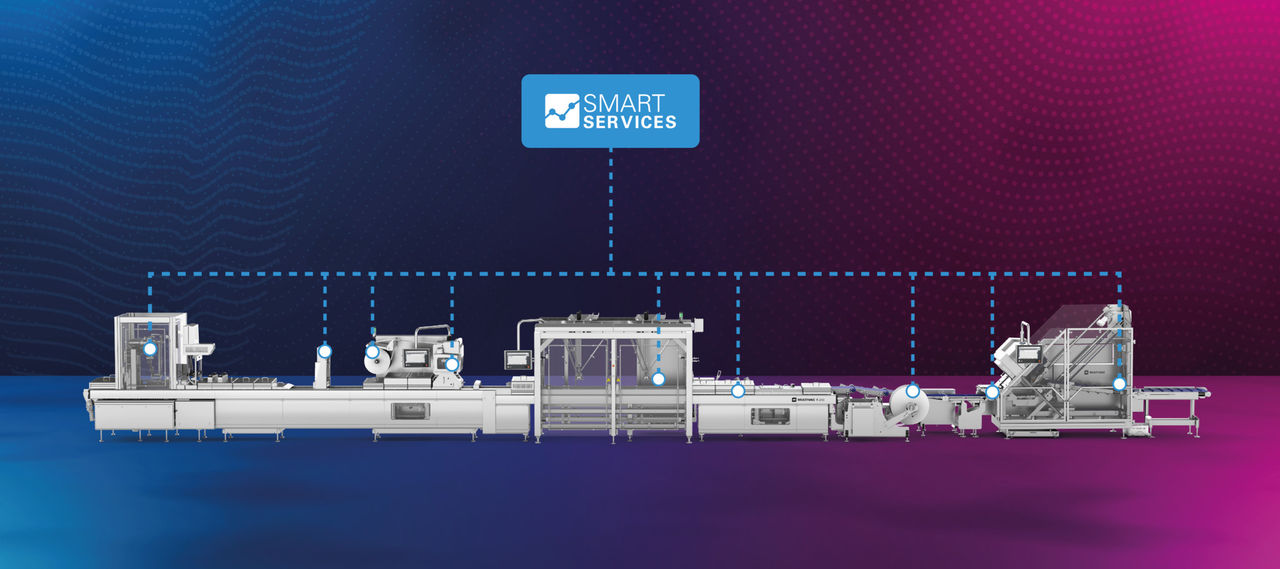
In the food industry, where everything is increasingly networked and automated, there is an ever growing demand for high-performance production machines, which run faultlessly and reliably every day. Unplanned machine breakdowns or longer periods of machine maintenance can cause huge costs, particularly where perishable products are involved. Frequently customers also do not exploit the full potential of their machines, because the processes are not perfectly in harmony with each other. And all this, when production lines and processes are becoming ever more complex. This means that the demands on the servicing of machines and lines also increase. The crucial question therefore is, how can servicing be organised in such a way, that it can be carried out reliably and cost-effectively within the demands of everyday production?
Servicing of machines and lines: Where the greatest hurdles lie
Servicing processes these days have to achieve a lot and all at the same time. Machine downtime has to be reduced to a minimum, because there is great pressure on time and costs in the processing of food. Since machines are frequently used for a wide range of products and operating requirements, the servicing of these machines must also be very individual. Recommended servicing is sometimes viewed critically by a company's production team for reasons of time and cost, if the benefit of regular servicing is not immediately recognised. In many companies the number of machines and line solutions, which need to be checked regularly, is also growing significantly, and there are ever fewer qualified staff available for this task.
The Smart Services from MULTIVAC can meet these challenges in the everyday production environment: They are intelligent services, which analyse databases and network the machines. They are matched precisely to the individual needs of food producers. The aim is to minimise unplanned machine downtime, make servicing more efficient and easier to plan, while also optimising the available resources – whether it is personnel, time or costs. In order to achieve this perfectly, an integrated servicing concept is required, which combines both established and new, data-based approaches. Part of this concept involves for example training users of the machines, so that they can prevent recurring faults. By using collected data as well, these faults can be prevented permanently. Crucial to this is the interaction of various servicing strategies that complement each other, namely Preventive Maintenance and Predictive Maintenance.
Preventive and Predictive Maintenance in synergy
Preventive Maintenance comprises the regular servicing measures, which can be planned and ensure that the machines function reliably and safely in daily operation. This creates the necessary foundation, on which all the other servicing work is built. Predictive Maintenance complements this approach by automatically analysing machine data. The aim is to predict, when the machine may be threatened by an unplanned breakdown, and when there could actually be a need for servicing. By combining both approaches, it is possible to plan and consolidate machine servicing in a targeted way. This means that unnecessary servicing can be avoided, costs reduced, the lifespan of the machines extended, and the risk of breakdowns reduced. The result is an integrated servicing concept, which can be planned and is data-based, while also being perfectly coordinated with the everyday production of a food company.

The decision about the use of preventive or predictive measures is a central component at MULTIVAC of the strategy for advising customers and planning their servicing work. In the case of the classic wearing parts, the replacement is generally preventive and on a regular basis. Predictive Maintenance is used in particular, where the manufacture, delivery, installation and replacement of a spare part would cause significant production downtime and create a high level of cost. In the case of machine parts, where it is possible to replace them seamlessly and without significant interruption to production, there is on the other hand a conscious decision to dispense with Predictive Monitoring.
A well-established database is crucial to the success of such applications: Around 200 GB of data flow every day into the analysis at MULTIVAC from connected machines and lines. In addition to the machines themselves, their sensors also continually capture data such as temperature, pressure or consumption of services, and they deliver a running picture of the machine's status. Even in the case of those customers with older machines, these sensors can generally be retrofitted without problems. Machine Learning (ML) and Artificial Intelligence (AI) assume the main role in processing the data. Working in conjunction with the human expertise of the MULTIVAC specialists, they can deliver reliable predictions.
Remote Assistance as added value
In addition to the integration of Preventive and Predictive Maintenance, a crucial role in a well-conceived servicing strategy is also played by Remote Assistance, which provides support by qualified service technicians remotely to customers' machines. Remote Assistance is already well established at MULTIVAC, and it enables customers to work together easily and remotely in a virtual environment with specialists at a MULTIVAC Service Desk. Using "Smart glasses", tablets or "Augmented reality" solutions, the MULTIVAC service technicians gain a view in real time into the particular machine locally and any potential faults. This enables them to support customers in a targeted way, by giving their production staff clear instructions about the required measures on the machine. In addition to this, it is also possible to configure machines or debug software remotely. In such cases (at MULTIVAC on average three times per day), Remote Assistance replaces deployment on-site and therefore saves time and resources.
There are still however situations, where the physical presence of service technicians is absolutely indispensable. A typical example is setting the parameters on the machine. Although parameter changes can also be performed via Remote Assistance, it is only on-site that a direct inspection can be made to see the effects of these changes on the pack quality. In such cases Remote Assistance can support the work of service technicians on-site, but not however completely replace it.
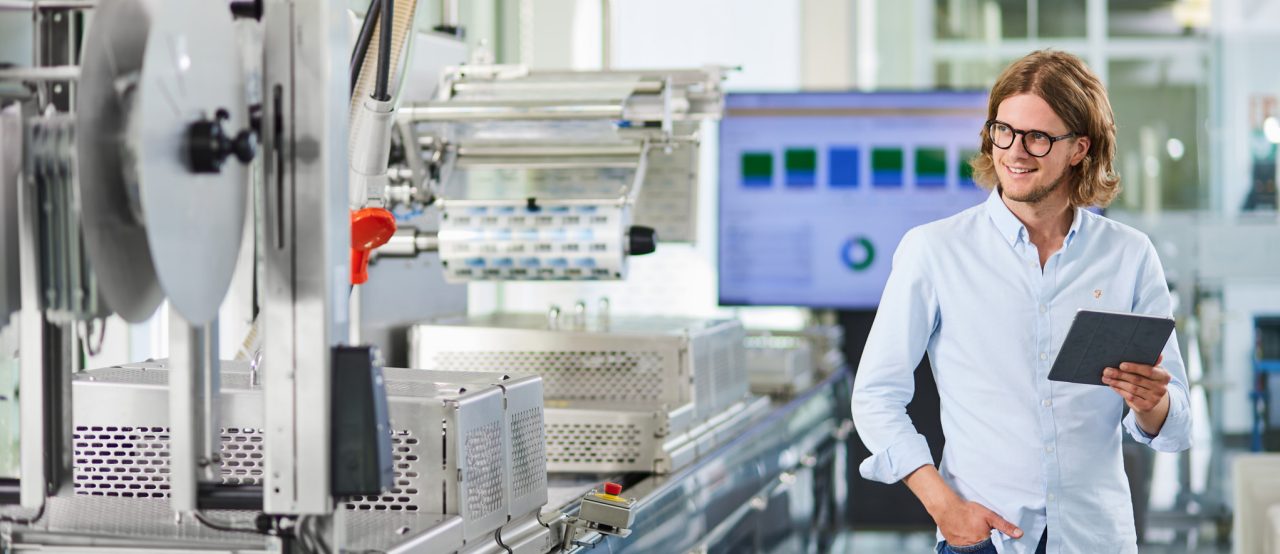
The benefits, which are achievable through the various servicing options, can easily be measured: At one customer for example, downtime of 32 hours due to the potential breakdown of a heating module was prevented, when MULTIVAC's so-called "Downtime Prediction" identified the problem at an early stage. In another case an unusually high consumption of compressed air pointed to a leak, which could have caused up to 26,000 euros of added costs to the customer annually. Thanks to the precise identification of the fault by algorithms, it was possible to direct the service technicians to the target. This meant that additional costs due to higher consumption of resources were avoided. And in the case of another customer, where an irregularity in a heating module was detected by intelligent algorithms, it was possible to avert a highly threatening machine breakdown thanks to proactive action. Here the process was aided by analysis based on extensive machine data worldwide, as well as the specialised technical knowledge of the MULTIVAC technicians.
The future of servicing lies in digital interaction
Smart Services help to reduce breakdowns and provide more transparency about the operation of the machine, and they enable rapid measures to be taken, if faults arise. Digital interaction also allows people to work remotely with the machine – not only to call up data, but also to control and administer machines from afar. Such functions are gaining in importance, particularly at times of high production pressure, shortages of skilled staff, and the increasing need for flexibility. They enable the servicing process to be efficient and independent, so that it can be performed without the physical presence of specialists on-site. It is precisely such solutions that are necessary, when the number of installed machines continues to rise due to the increasing automation in production environments. It is clear that the future of machine servicing lies in digital interaction Companies, which exploit these opportunities, gain crucial competitive advantages, as well as avoiding losing ground in the process of digital transformation.
17.06.2026